Chiquitica,
the low-cost guitar
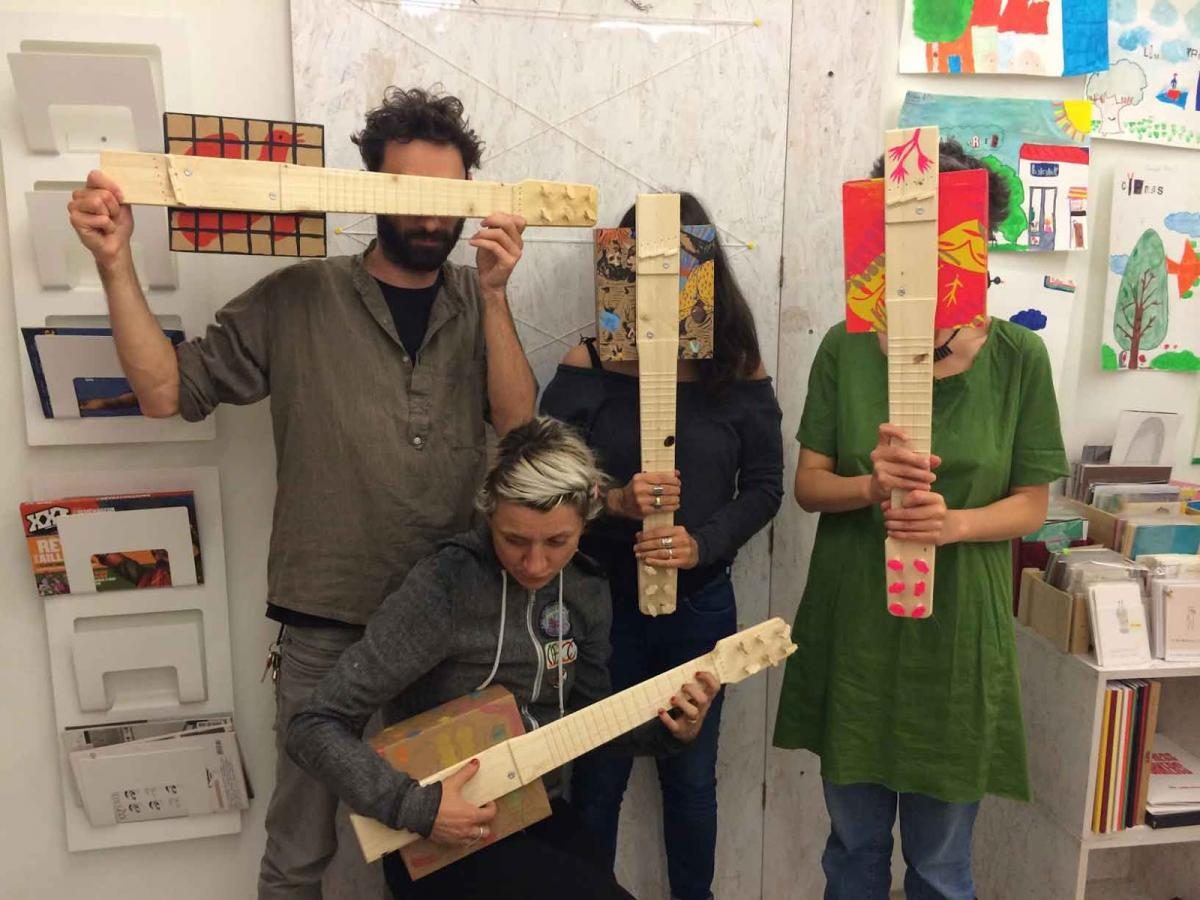
We invented a guitar made of wood, fishing line and cardboard: it costs so little that it can be given to anyone. We built and sold more than two thousand of them.
The project is on hold today. It did not fail: it went too well for the way we are set up.
Why it is on hold
The Chiquitica stopped being a volunteer project and turned into a business: orders, admin, suppliers, production, packing, deliveries. We are volunteers, and at some point we could no longer keep up.
It is a shame, because we never spent a euro on advertising and the thing kept going by itself.
If somebody wanted to take the project on and support it, they would be very welcome. We are happy to talk about it — sponsorship included, for instance with the sponsor's logo printed on the cardboard.
What it is
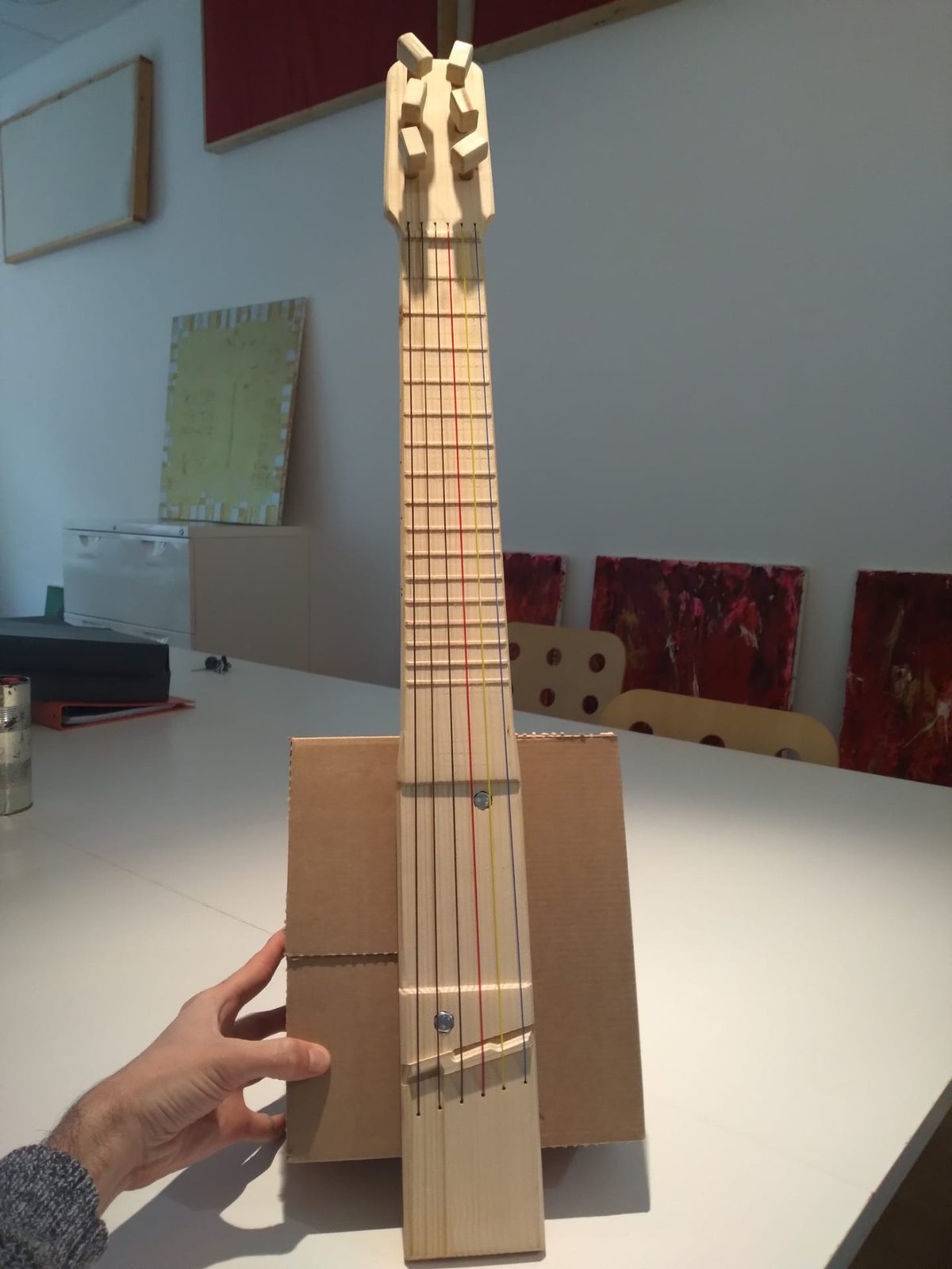
It is called a Chiquitica, which in Cuban Spanish means “little one”. It is a very humble instrument, but it sounds like an ordinary guitar, only quieter.
In some countries a real guitar is so expensive that it gets stolen, sold or traded away before anyone has even played it. The tiny cost of ours makes it very useful in those places. It remains a preparatory instrument: it is there to bring someone closer to music, and to anyone who shows real interest in studying we then entrust a proper guitar.
The proceeds from sales funded the music schools and paid for the expensive machinery needed to produce them.

How it is made
The body is cardboard, the neck is wood, the strings are fishing line. You assemble it by hand, and whoever assembles it learns something while doing so.
That is also why it worked so well with children: you built it, decorated it and played it in the same afternoon.
The workshops, while they ran
For years we took the Chiquitica building and decorating workshops on the road: to schools, bookshops and festivals. We showed how one is built, handed out colours to decorate it, and told the story of children the same age whose lives are harder.
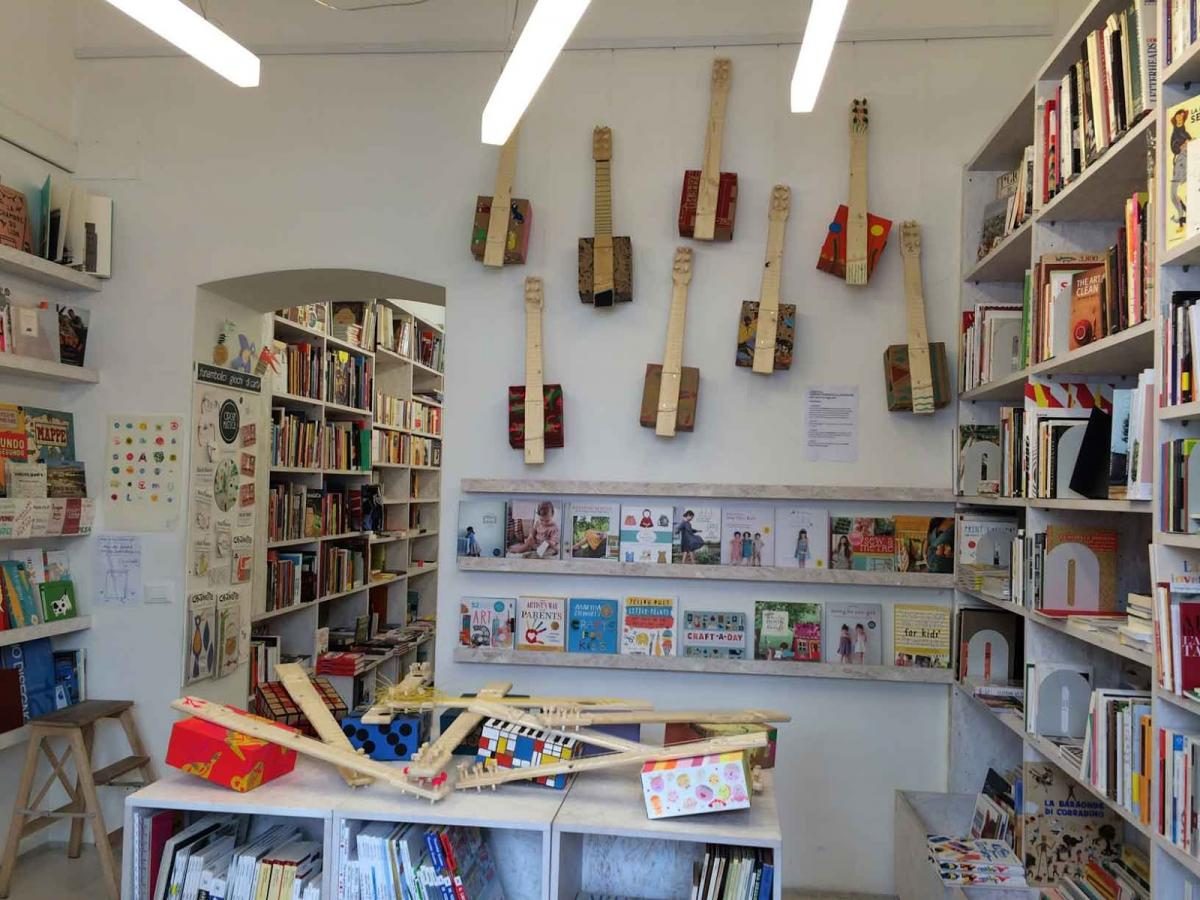
A special mention goes to the collections of illustrated guitars made in Milan, Trento and Verona in specialist bookshops, where a number of illustrators and artists decorated some truly one-off models.
The workshops are on hold as well: with no production there are no guitars to assemble.